THE BEST IN RESIDENTIAL AND COMMERCIAL WINDOW TINTING
Which Window Film Is Safest for Schools and Daycares?
Glass safety has become a major priority for educational facilities across Southwest Florida. Schools and daycares in Sarasota County, Charlotte County, Lee County, and Manatee County operate in an environment where risk exposure is not theoretical. Daily foot traffic, active play, crowded pickup lines, and accidental impacts can turn ordinary glass into a serious hazard within seconds. Add Florida storm seasons, wind driven debris, and a rising focus on campus security, and administrators are right to look for upgrades that reduce injury risk and strengthen the building envelope without disrupting learning.
Professionally installed
safety and security window film is one of the most effective ways to improve glass safety, security, UV protection, and energy efficiency using the windows you already have. When specified correctly and installed by trained professionals, the right film system can help hold shattered glass together, reduce ultraviolet exposure in classrooms, cut glare on learning surfaces, and lower cooling loads in Florida heat. This guide explains how to choose the safest window film for schools and daycares and what performance factors matter most.
Table of Contents
- 1. Common risks of untreated school and daycare glass
- 2. Standard window film vs safety and security film
- 3. How security film helps hold shattered glass in place
- 4. UV protection benefits for classrooms and childcare
- 5. Glare reduction and energy efficiency in Florida heat
- 6. Compliance considerations for educational facilities
- 7. Why professional installation matters long term
- FAQ: 10 common questions from administrators
- Conclusion and next steps in Southwest Florida
1. Common risks associated with untreated school and daycare glass
Most educational buildings have a large amount of glass. Entry doors, sidelites, interior vision panels, administrative offices, classroom windows, and multi purpose spaces all rely on glazing for visibility and daylight. In a school or daycare setting, that glazing is exposed to unique stressors that increase the chances of breakage, injury, and operational disruption.
Top risk categories to evaluate:
- Accidental impact and collisions: Running children, sports activities, carts, and everyday movement can lead to direct impacts on glass doors and sidelites.
- Forced entry attempts: Even a small delay can matter during a security incident. Untreated glass can be breached quickly.
- Storm and wind driven debris: Florida storms can push branches, gravel, and debris into glazing, especially around playgrounds and parking areas.
- Shattered glass hazards: When glass breaks, sharp fragments can travel far from the opening and create secondary injuries.
- UV exposure and interior fading: Sunlight can degrade materials and may contribute to glare and heat buildup in learning spaces.
- Glare and visual discomfort: Bright reflections can interfere with reading, whiteboards, and digital presentations, even if your facility limits screen use in early learning rooms.
- Energy loss and uneven comfort: Large expanses of glass can increase cooling demand and create hot spots near windows.
These risks affect more than safety. They can impact attendance, parent confidence, staff retention, and budget planning. That is why many decision makers searching for school safety window film Florida are looking for a solution that addresses multiple concerns at once rather than a single issue.
2. Standard window film vs safety and security film
Not all window films are designed for safety outcomes. Many films focus on appearance, glare reduction, or solar control. Those benefits can still be valuable for schools and daycares, but they are not the same as a system engineered to strengthen glazing and help mitigate broken glass hazards.
Standard window film typically refers to solar control or decorative films that reduce heat, glare, or visibility. These products can be excellent for comfort and privacy, but their primary purpose is not glass retention under impact.
Safety and security window film is engineered with thicker constructions and stronger adhesives to help hold glass fragments together. When paired with the right attachment system and installed properly, it can improve how a pane behaves after breakage.
Comparison snapshot for educational facilities:
- Primary goal: Standard film focuses on comfort and aesthetics. Safety and security film focuses on glass retention and delayed entry, with comfort benefits available as add ons.
- Typical thickness range: Solar control films are often thinner. Safety and security films are commonly thicker and purpose built.
- Post break behavior: Standard films may not be designed to keep shards together. Safety and security films are designed to help bind fragments and reduce fallout.
- Best use case: Standard film is ideal for glare and heat reduction. Safety and security film is ideal for doors, sidelites, and high risk glazing where impact or forced entry is a concern.
For facilities in Southwest Florida, the safest approach is often a layered specification. Use a safety and security film where the risk is highest, then apply solar control or spectrally selective options where comfort and efficiency are the priority. A qualified contractor can design a plan that fits budget realities while improving protection across the campus.
3. How security window film helps hold shattered glass in place
When administrators ask whether security window film can make glass safer, the most important concept is glass retention . Glass can still break. The goal is to reduce the chance that it turns into flying or falling shards and to help keep the opening more intact immediately after impact.
What happens without film: When annealed glass breaks, it can fracture into large sharp pieces. Even tempered glass, while safer in many cases, can still leave an opening that allows wind, rain, or unauthorized entry. In a storm event or security event, an opening is often the problem you are trying to avoid.
What a properly installed safety and security film can help do:
- Bind fragments together after breakage, reducing glass fallout into classrooms, hallways, and play areas.
- Reduce secondary injuries by limiting the spread of sharp shards.
- Slow forced entry by making it harder to clear the opening quickly.
- Maintain a barrier longer during a storm or incident, which can support emergency procedures and response time.
Performance factors to compare:
- Film thickness: Thicker constructions can provide stronger retention. Your installer should match thickness to risk areas such as doors, sidelites, and ground level windows.
- Adhesive and edge integrity: The bond is critical. If edges fail, retention performance can drop.
- Attachment systems: In higher risk applications, an attachment system can improve how the filmed glass stays anchored to the frame.
- Glazing type and condition: Old seals, compromised frames, or damaged panes can limit performance regardless of film quality.
Quick selection guide by risk area:
- Main entries and reception: Prioritize safety and security film and discuss attachment systems.
- Classroom exterior windows: Evaluate safety film plus solar control to address both protection and comfort.
- Interior vision panels: Consider safety film for impact protection and privacy solutions where appropriate for child safeguarding policies.
- Gyms and multipurpose rooms: Consider higher impact risk and higher occupancy, then specify accordingly.
For administrators researching daycare security window film Sarasota or commercial window film Lee County , the best next step is a site assessment that maps glazing locations to risk profiles. That prevents over specifying film in low risk areas and under specifying in high risk areas.

4. UV protection benefits for classrooms and child care environments
Safety and security is the primary driver, but UV protection is a meaningful co benefit for educational facilities. UV exposure can contribute to fading, material degradation, and visual discomfort. It also supports wellness goals by reducing ultraviolet radiation in spaces where children and staff spend long hours.
High quality window film systems can provide very high UV rejection . When you are evaluating products, ask for documented UV performance and ensure the film choice aligns with your glazing type and daylight needs.
Where UV protection matters most in schools and daycares:
- Classrooms with direct sun: Especially morning or afternoon exposure.
- Libraries and media areas: Books, displays, and finishes can fade over time.
- Early learning rooms: Children often sit and play near windows and on floors where sunlight lands.
- Administrative offices and reception: Staff comfort and furniture protection support workplace performance.
UV performance comparison range (typical):
- Basic solar films: High UV rejection in many cases, but performance varies by product line.
- Premium solar and safety systems: Often deliver very high UV rejection while also supporting safety outcomes.
In procurement discussions, use the keyword framing that matches your stakeholders. For example, health and wellness teams may respond to UV protection window film classrooms , while facilities teams focus on maintenance reduction and asset protection. Both groups can align around the same project.
Film Systems of Florida installs
LLumar SelectPro Vista window film solutions engineered to support UV protection, glare control, and energy efficiency. When combined with safety and security specifications where needed, it is a practical pathway toward safer and more comfortable learning environments.
5. Glare reduction and energy efficiency improvements in Florida heat
Florida educational facilities often battle two competing goals. You want daylight for a welcoming learning environment, but you also need to control glare and heat gain. Window film can reduce solar heat gain and glare while preserving natural light when the right technology is selected.
Glare reduction in learning spaces:
- Improved visibility: Reduced reflections on boards and reading surfaces.
- Better comfort: Less squinting and fewer complaints in high sun rooms.
- More consistent instruction: Teachers can use daylight without constantly adjusting blinds.
Energy efficiency outcomes administrators care about:
- Lower cooling demand: Reduced heat entering through glass can decrease HVAC load.
- Better temperature consistency: Fewer hot zones near windows.
- Potential utility savings: Savings vary by glass type, orientation, and building schedule.
Comparison metrics to request from your installer:
- UV rejection percentage
- Visible light transmission so rooms do not become too dark
- Glare reduction percentage
- Solar heat gain performance and estimated cooling impact
Practical guidance for Southwest Florida campuses: Start by prioritizing west facing and south facing glass, front offices with heavy sun, and rooms with persistent glare. Pair solar control needs with the safety requirements of each opening. This approach helps your project support both security and energy performance without compromising learning conditions.
6. Compliance considerations for educational facilities
Educational decision makers often need to balance safety outcomes with policy requirements and operational constraints. While window film can be part of a comprehensive safety strategy, your selection should consider how the glazing is used and what standards your organization follows.
Key compliance themes to discuss during planning:
- Emergency egress and life safety planning: Doors and openings used for egress must remain functional. Film should not interfere with hardware or visibility requirements.
- Interior visibility and supervision: Daycare rooms often require visibility for supervision. If privacy films are considered, ensure they align with safeguarding policies.
- Glass safety locations: Doors, sidelites, and low glazing in child occupied areas are common priorities for safety upgrades.
- Storm risk planning: In Florida, projects often tie into hurricane preparation plans. Film can be a meaningful layer in a broader resilience strategy.
- Documentation and warranty records: Facility managers typically need records for asset management, future renovations, and insurance discussions.
Because compliance needs vary across districts and property types, the safest workflow is a structured evaluation. Identify glazing locations, confirm glass types, evaluate occupant risk, then specify film systems that support safety and operational requirements. This is also where a local expert can help align the project with expectations in Sarasota County, Charlotte County, Lee County, and Manatee County.
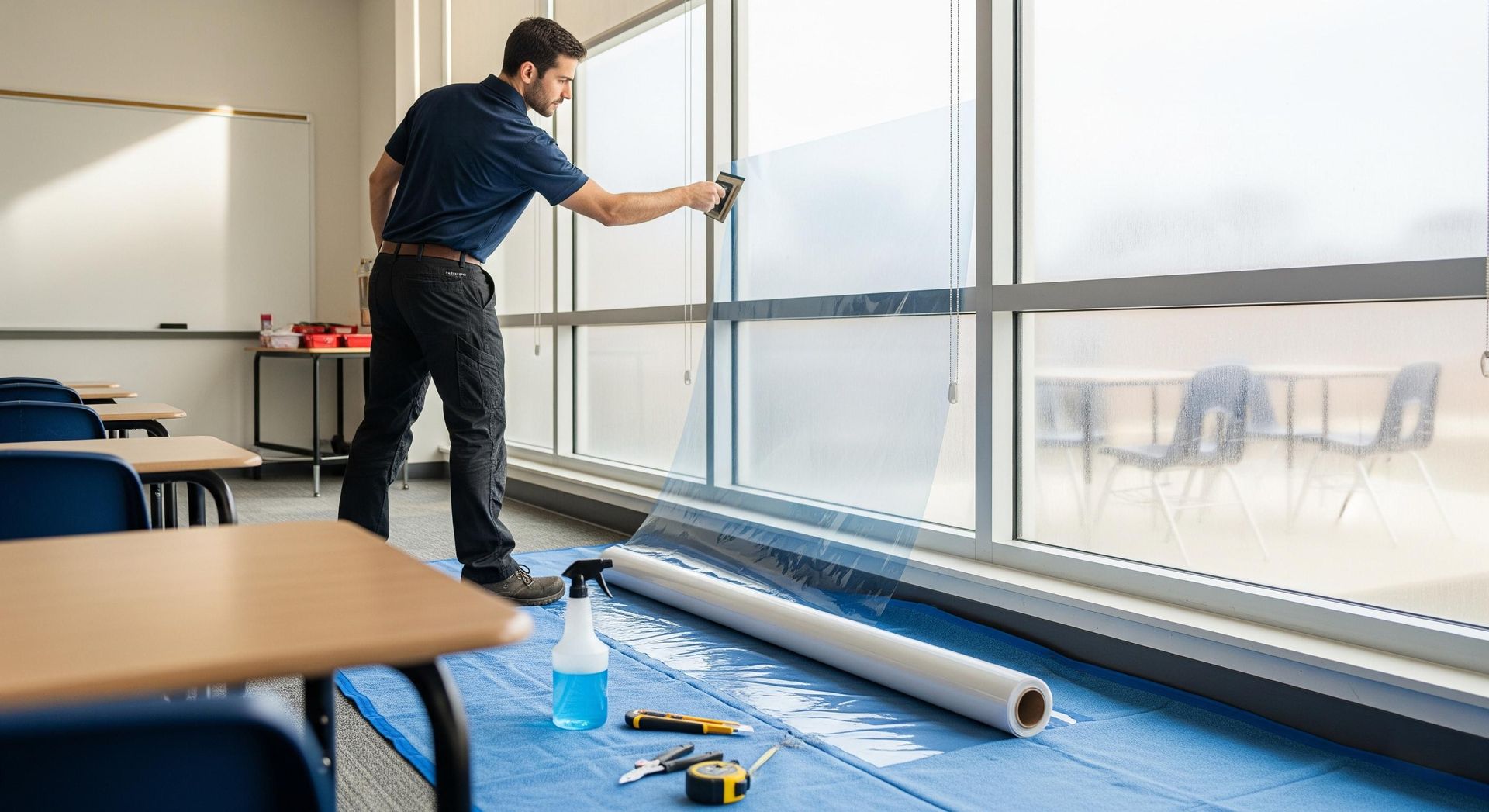
7. Why professional installation ensures performance and long term durability
In educational facilities, performance and durability are not optional. A film that is installed incorrectly can fail at edges, haze, or peel. In safety and security applications, improper installation can reduce the very retention benefits you are investing in.
Why professional installation matters:
- Correct surface preparation: Dust, residue, and old adhesives can undermine the bond and appearance.
- Accurate trimming and edge finishing: Clean edges support longevity and reduce early lifting.
- Proper handling of school schedules: Work can be phased after hours, on weekends, or during breaks to minimize disruption.
- Specification matched to each opening: Doors, sidelites, and large panes may require different approaches.
- Quality assurance: Professionals can document glazing conditions and provide care instructions that support warranties.
What to ask your installer before approving a project:
- Which openings are the highest priority for safety retention and delayed entry?
- What film thickness levels are recommended for doors and sidelites versus classroom windows?
- How will the project be scheduled to avoid student exposure to work areas?
- What maintenance steps are required to protect appearance and warranty coverage?
- What documentation will be provided for the facility record?
Film Systems of Florida is a LLumar SelectPro Dealer installing LLumar Vista Window Film products engineered for security, UV protection, glare control, and energy efficiency. For districts and private operators looking for reliable results, professional installation ensures the film system performs as intended for Florida educational facilities.
FAQ: Which window film is safest for schools and daycares?
Does security window film make glass shatterproof?
No. Safety and security film is designed to help hold shattered glass together and reduce fallout. The glass can still break, but the film can help reduce shards and maintain a barrier longer.
How long does installation take in an active school?
Timeline depends on the number of panes, access, and whether work is phased. Many schools schedule work after hours, on weekends, or during breaks to reduce disruption and keep students away from work zones.
Will window film make classrooms too dark?
Not necessarily. Solar control options can be selected with higher visible light transmission while still reducing glare and heat. A professional assessment helps balance comfort with daylight.
Is window film a substitute for impact rated windows?
Window film can be a powerful upgrade, especially for glass retention and comfort, but it is not the same as replacing glazing with impact rated systems. Many facilities use film as a cost effective layer within a larger resilience plan.
What maintenance is required after installation?
Maintenance is typically straightforward. Use film safe cleaning methods and avoid harsh or abrasive tools. Your installer should provide a care guide to help protect appearance and warranties.
Does film help with hurricane resistance?
Film can help with glass retention after breakage and can reduce shards, which is valuable during storm events. The best results come from proper product selection and professional installation tailored to each opening.
What warranty coverage is typical?
Warranty terms depend on the specific film, application type, and installation conditions. Always request written warranty documentation and keep it in your facility records.
What does school safety window film cost in Florida?
Cost depends on glass size, quantity, film type, and whether safety and security specifications are used for high risk openings. A site survey and estimate is the only reliable way to budget accurately.
Can security film reduce break ins or forced entry?
Safety and security film can make glass harder to clear quickly and may slow entry. It is best used as part of a broader security strategy that includes access control and procedures.
Which areas should we film first if budgets are limited?
Start with main entries, reception, doors and sidelites, and any ground level glazing near play areas or high traffic corridors. Then expand to classrooms with heavy sun exposure for UV and heat control benefits.
Conclusion: A safer, smarter glass upgrade for Florida facilities
For school administrators, daycare owners, facility managers, and property decision makers, window film is one of the most practical upgrades available because it improves multiple priorities at once. The safest approach starts by identifying high risk glazing, then specifying safety and security window film systems designed to help hold broken glass together, reduce injury risk, and support delayed entry. When combined with solar control performance, the same project can also deliver meaningful UV protection for classrooms, glare reduction, and lower cooling load in Florida heat.
If you are evaluating
school safety window film Florida,
daycare security window film Sarasota, or
commercial window film Lee County,
Film Systems of Florida can help you choose the right solution for each opening. As a
LLumar Select Pro Dealer installing
LLumar Vista Window Film products engineered for security, UV protection, glare control, and energy efficiency, the team supports educational facilities across Sarasota County, Charlotte County, Lee County, and Manatee County.
Next step:
Contact Film Systems of Florida to request a
free estimate and a glazing assessment. A professionally designed window film plan can help protect students, staff, and facilities while improving comfort and operational efficiency year round.
Film Systems Of Florida Blog